Concept
Climactic Action
Climactic Action, also known as climax volume, buying/selling climax bars, is a Volume & Order Flow concept. The Library holds 1 implementation, a working definition you can pull into Quant.
Top Climactic Action indicator
The top custom implementation, built on the original standard Climactic Action formula.
1 total
The Climactic Action implementation below can become a backtested trading strategy — describe your rules and Quant writes the code.
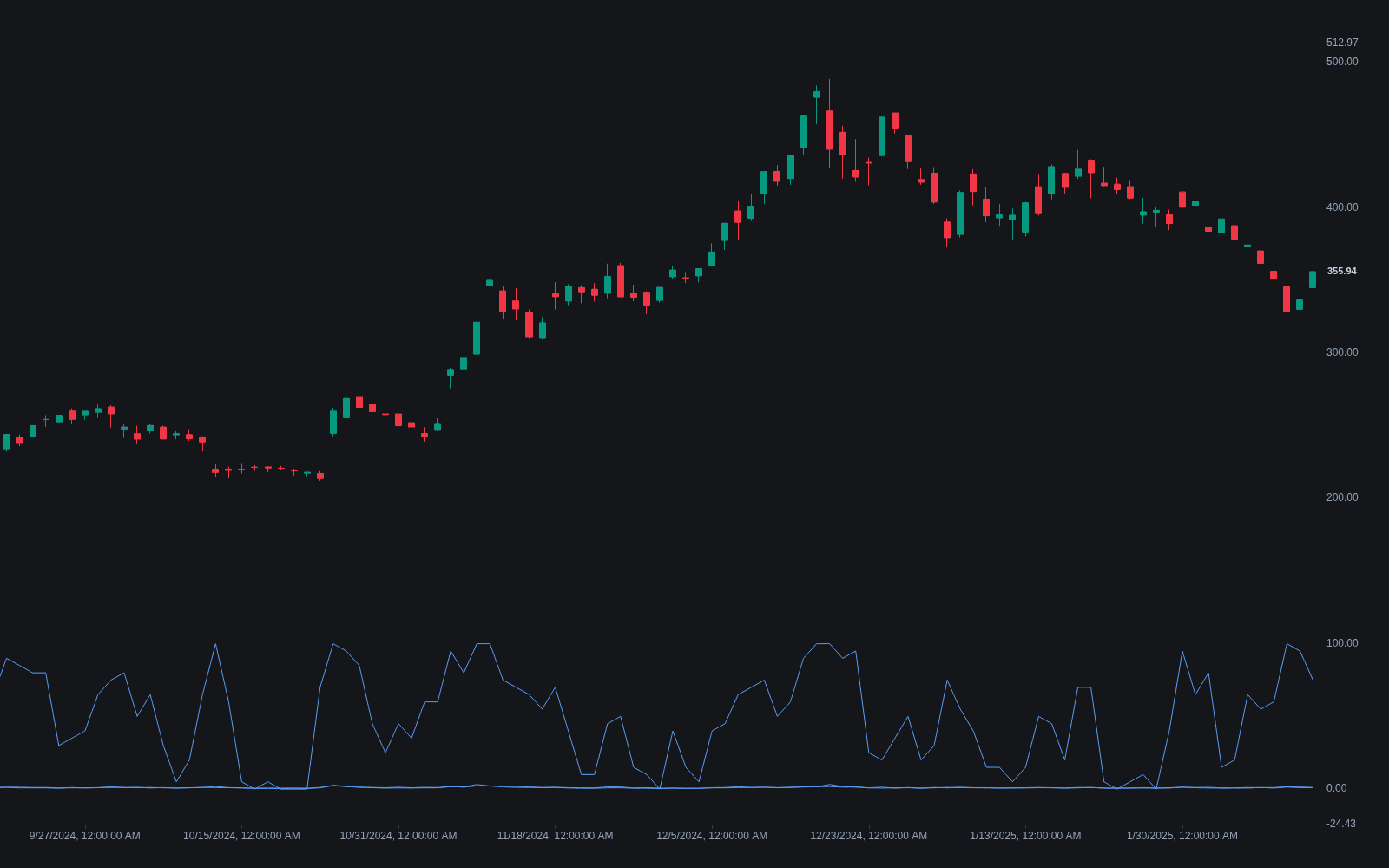
What is Climactic Action?
Climactic action is the volume-spread-analysis term for the violent end of a trend: a bar or short burst of bars with ultra-high volume and unusually wide range after an extended move, where positions change hands wholesale. In a selling climax, panicked supply from late sellers is absorbed by larger buyers; in a buying climax, euphoric demand is sold into. The idea descends from Wyckoff, whose accumulation schematic begins with preliminary support and a selling climax, followed by an automatic rally and a secondary test.
The vocabulary has a clear lineage. Richard Wyckoff described climaxes as phase-opening events in his early twentieth-century course material, and the volume-spread-analysis tradition associated with Tom Williams later systematized the bar-level reading: volume, spread (range), and close position examined together to infer what professional money did inside the bar. Climactic action is that tradition's name for the terminal convulsion.
The tell is not volume alone but extreme effort paired with the close and the follow-through: a selling climax often closes well off its low, showing demand met the flush, and the next bars fail to make meaningful downside progress. Climactic action marks a probable transfer from weak hands to strong hands, yet it is better read as the end of one move than the start of another; markets frequently range and retest before reversing.
Quantifying the read keeps it honest. Climactic volume is defined relative to the instrument's own recent prints, the job of relative volume, not by any absolute number, and the bar's range earns the label only against recent bars. Location matters just as much: the same volume signature mid-range is ordinary business, and on a breakout it reads as initiative volume rather than a climax. After the event, the climax extreme and the heavy prints around it often define the value area edges the subsequent range trades around.
How to identify climactic action on a chart
The selling climax at a low is described; invert every element for a buying climax at a high.
- 1Require an extended prior decline; a climax is a terminal event, so without a mature trend behind it the signature is just a busy bar.
- 2Look for volume that towers over the instrument's recent prints, a multiple of typical activity on a relative volume basis rather than a fixed number.
- 3Check the bar itself: unusually wide range, often into a fresh low, the kind of bar that dwarfs its neighbors.
- 4Read the close: a finish well off the low says the flush met demand; a close on the dead low leaves the question open until the next bars answer.
- 5Demand follow-through failure: after the climax, downside progress should stall, with the automatic rally lifting price away from the extreme.
- 6Wait for the secondary test: a return toward the climax low on visibly lighter volume is the classic confirmation that supply was absorbed.
How traders use it
- Flagging exhaustion: an ultra-high-volume, wide-range bar into new lows or highs after a long trend puts traders on alert that the move may be in its final act, especially when the close rejects the extreme.
- Framing Wyckoff-style ranges: the climax defines one edge of a developing range, and traders wait for the secondary test on lighter volume rather than trading the climax bar itself.
- Risk management for trend riders: climactic prints against an open position are a common cue to tighten stops or bank profits, since a climax warns the trend's fuel may be spent.
- Reading the transfer directly: on footprint or delta tools, a selling climax shows heavy sell volume delta being absorbed without proportional downside progress, the order-flow version of the effort-versus-result read.
- Mapping the aftermath: the climax bar's extreme and the high-volume node it prints become the reference levels of the subsequent range, with the point of control migration showing which side is winning the retest phase.
Climactic Action vs related volume events
Volume Spike: A volume spike is any print far above recent activity, wherever it occurs. Climactic action is a located spike: terminal position after an extended trend, extreme range, and a close that hints at absorption, read as a phase event rather than a curiosity.
Volume at Breakout: Breakout volume is initiative: heavy business powering price out of balance at the start of a move. Climactic volume is terminal, the convulsion that ends a move. The same raw signature reads oppositely depending on where in the trend it prints.
Volume Divergence: Volume divergence is the gradual warning: successive extremes made on fading participation. The climax is the abrupt one, a single convulsion of maximum participation. Trends often show the first for bars or weeks before ending on the second.
Concept family
Volume & Order Flow
88 concepts mapped · 88 in the Library
Climactic Action FAQ
Turn Climactic Action into a trading strategy.
Take the implementation from this page into Quant, then build on it, backtest it on real data, and keep refining it in conversation.