Concept
High/low-volume Nodes
High/low-volume Nodes, also known as HVN, LVN, volume shelf, volume gap/void, are Volume & Order Flow concepts. The Library holds 11 implementations, each one a working definition you can pull into Quant.
Top High/low-volume Nodes indicators
The top custom implementations, built on the original standard High/low-volume Nodes formula.
11 total
Want to trade High/low-volume Nodes? Any of the 11 implementations below is one prompt away from a backtested strategy in Quant.
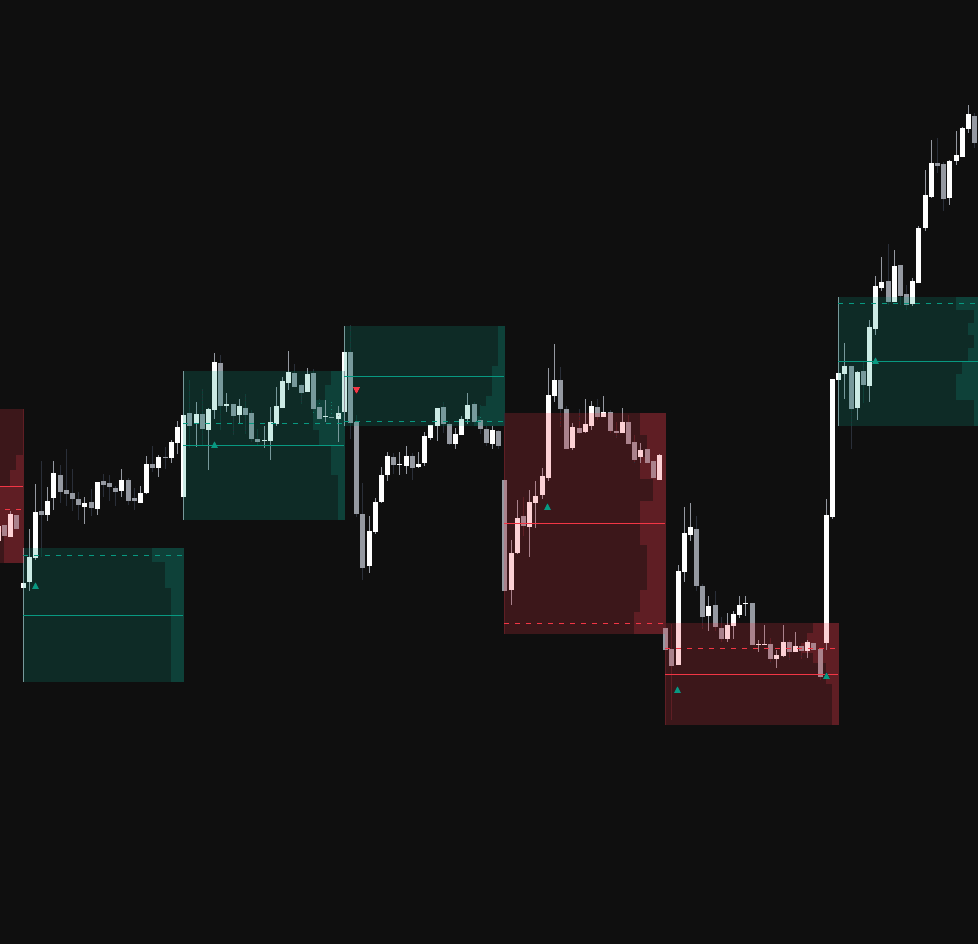
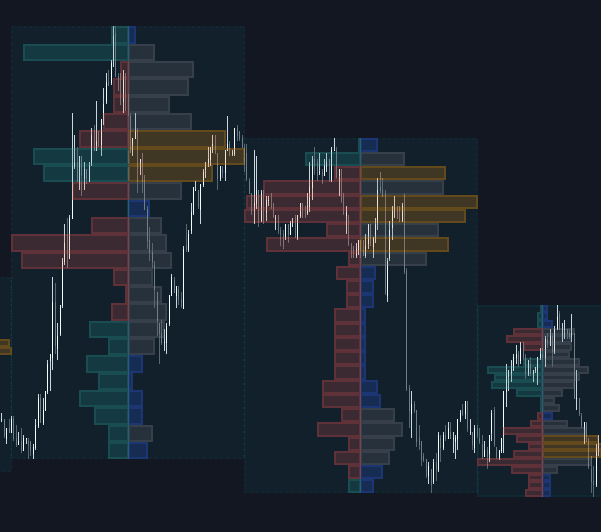
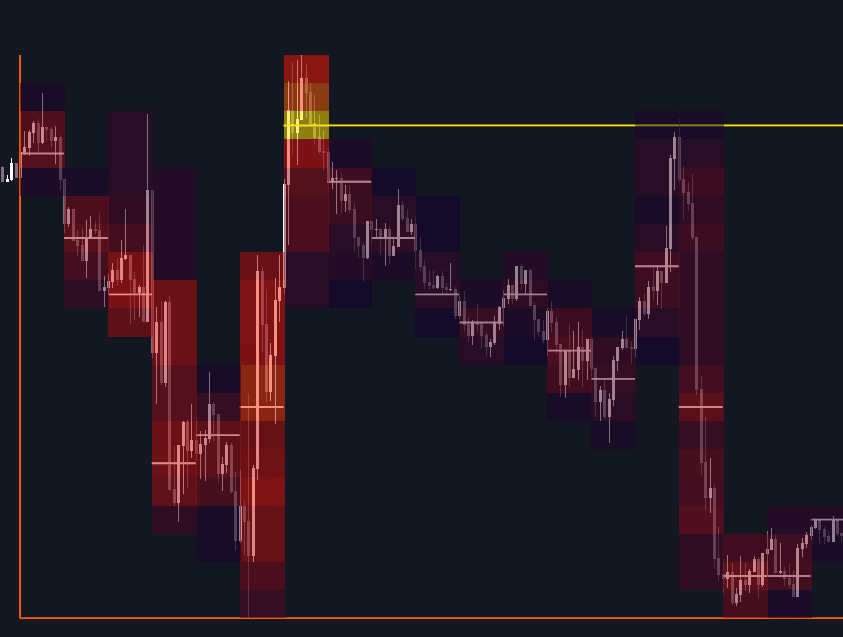
What are High/low-volume Nodes?
High-volume nodes (HVNs) and low-volume nodes (LVNs) are the peaks and troughs of a volume profile, the histogram of volume traded at each price over a chosen range. An HVN is a price area where trade was unusually heavy: the market spent time there and both sides accepted doing business, which is why HVNs are also called volume shelves. An LVN is the opposite, a thin strip where little volume printed, usually because price moved through quickly as the market rejected those prices; traders call these volume gaps or voids.
The standard reading is acceptance versus rejection. HVNs act sticky: when price returns to one it tends to slow, chop, and rotate, because many participants hold positions and reference points there. LVNs act like air pockets: price tends to traverse them fast, and the edges of value frequently sit at them. That makes nodes a way to draw a support and resistance skeleton from actual participation rather than from swing points alone. These are tendencies, not rules; a node describes where volume was, and fresh flows can accept a price the market previously rejected.
How to identify high- and low-volume nodes
Nodes fall out of any volume-at-price histogram once you decide what range it should cover.
- 1Build a volume profile over a defined window: a session, a swing, a multi-day composite, or the visible range. The window choice matters, because a level that is an LVN inside one range can be an HVN inside a larger one.
- 2Mark the local maxima of the histogram as HVNs. The tallest is the point of control, and a wide plateau of heavy volume counts as one shelf rather than several separate peaks.
- 3Mark the pronounced valleys as LVNs, especially thin strips separating two distinct distributions; these often line up with fast moves, gaps, or the edges of the value area.
- 4Sanity-check sensitivity: row size (price bin width) and the profile period change what registers as a node, so favor nodes that persist across a couple of reasonable settings.
How traders use it
- As pre-drawn decision levels: HVN edges and LVN strips give objective places to expect a reaction or an acceleration before price arrives, complementing swing-based support and resistance.
- For trade location: entries near an LVN boundary keep risk tight, since thin zones tend to resolve quickly in one direction or the other, while entries in the middle of an HVN accept chop by construction.
- For targets: once price leaves one distribution, the next HVN is a common objective, on the logic that heavy prior participation slows movement, while intervening LVNs are expected to trade fast.
- For regime reads: rotation between two HVNs signals balance, and volume steadily building inside a former LVN signals acceptance where there was rejection, an early hint that the map is being redrawn.
High/low-volume nodes vs related profile concepts
Point of Control: The POC is the single price with the most volume in a profile, the tallest HVN; node analysis looks at the whole topography of peaks and valleys around it.
Value Area: The value area is the band containing a set share of the profile's volume (commonly around 70%); HVNs and LVNs are local features that can sit inside or outside it, and LVNs often mark its edges.
Single Prints: Single prints are the TPO-profile cousin of an LVN: prices touched in only one time bracket. Both mark rejection, but singles measure time at price while LVNs measure volume at price.
More High/low-volume Nodes implementations
Concept family
Volume & Order Flow
88 concepts mapped · 88 in the Library
High/low-volume Nodes FAQ
Turn High/low-volume Nodes into a trading strategy.
Take any implementation from this page into Quant, then build on it, backtest it on real data, and keep refining it in conversation.