Concept
Volume Delta
Volume Delta, also known as per-bar delta, delta flip, max/min delta, is a Volume & Order Flow concept. The Library holds 10 implementations, each one a working definition you can pull into Quant.
Top Volume Delta indicators
The top custom implementations, built on the original standard Volume Delta formula.
10 total
Every Volume Delta implementation here is strategy-ready: open one in Quant, set your rules, and it backtests automatically.
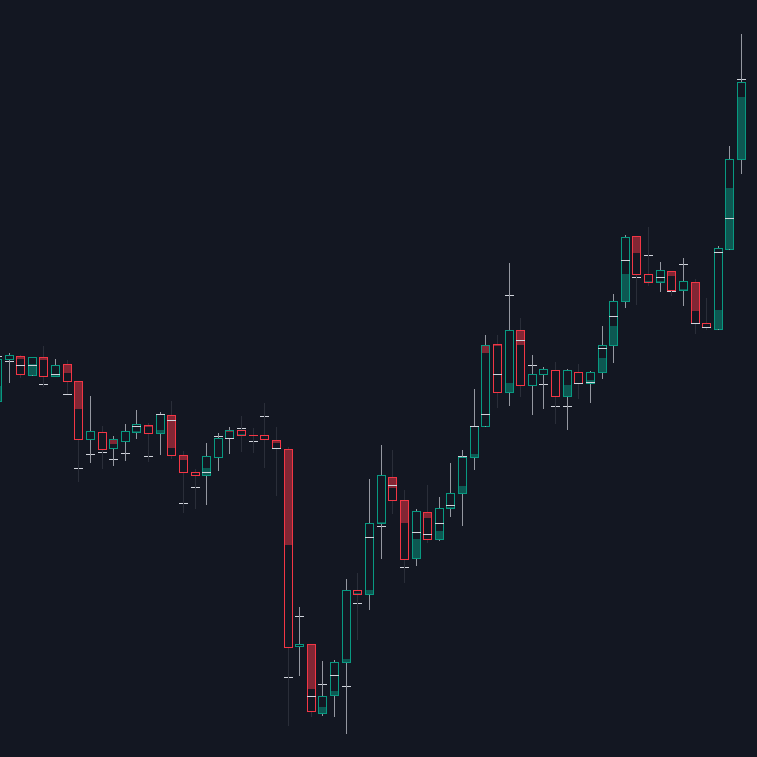
.png&w=3840&q=75)
.png&w=3840&q=75)
What is Volume Delta?
Volume delta is the difference between buying and selling volume within a bar, where buying means trades executed by lifting the offer and selling means trades hitting the bid. Every transaction has both a buyer and a seller, so delta is not net ownership; it measures which side was aggressive enough to cross the spread to get filled. A bar with 800 contracts bought at the ask and 500 sold at the bid prints a delta of +300.
Measurement quality depends entirely on the data. With tick-level bid/ask data, each trade is classified by the side it executed on and delta is close to exact. Bar-only platforms approximate it by splitting volume using intrabar price movement or candle direction, so the same bar can show different deltas on different tools. The running intrabar total also leaves a trace: max delta and min delta record the extremes buyers and sellers reached before the bar closed.
Delta matters because it separates price change from the initiative behind it. A rally on strong positive delta was driven by aggressive buyers; the same rally on flat or negative delta means passive bids did the lifting, a very different auction. Disagreement between price and delta is where the tool earns its keep, flagging absorption and exhaustion, but delta extremes can mark climaxes as easily as strength, so direction should never be read from the sign alone.
How to calculate Volume Delta
The definition is one subtraction; the real work is classifying each trade's aggressor.
- 1Classify volume by aggressor: trades executing at or above the ask count as buy volume, trades at or below the bid count as sell volume. Without bid/ask data, platforms fall back on tick direction or intrabar candle logic, which is an approximation.
- 2Subtract: delta equals buy volume minus sell volume for the bar. Positive means buyers were more aggressive, negative means sellers were.
- 3Track the running intrabar sum to capture max delta (the buyers' best moment) and min delta (the sellers'), which show what happened inside the bar rather than only where it ended.
- 4Compare delta with the candle. An up bar on positive delta is coherent; an up bar closing with negative delta says aggressive sellers were absorbed by passive buyers, and that disagreement is the signal worth investigating.
How it's calculated
Volume delta is the net difference between buyer-initiated and seller-initiated volume inside each bar.
Without bid/ask tick data, platforms approximate by classifying lower-timeframe bars: volume of up bars counts as buying, volume of down bars as selling.
BuyV_t + SellV_t equals the bar's total volume.
A delta flip is a change in the sign of Delta_t from one bar to the next.
How traders use it
- To confirm or fade breakouts: a breakout accompanied by strong aligned delta shows initiative behind the move, while a break on weak or opposing delta is a candidate false breakout.
- To read divergence: price making a new high while delta shrinks or flips negative is delta divergence, an early sign that the aggressive flow driving the leg is thinning.
- To accumulate context: summing per-bar delta into cumulative volume delta tracks aggressor flow across a whole session or swing, where single-bar readings are mostly noise.
- To drill into levels: footprint charts distribute delta across each price within the bar, showing exactly where imbalances and absorption occurred rather than reporting one net figure for the bar.
Volume Delta vs related flow measures
Cumulative Volume Delta: CVD is the running sum of per-bar deltas. Delta answers 'who was aggressive in this bar'; CVD answers 'who has been aggressive since the anchor,' making it the swing-level version of the same measurement.
OBV: On-balance volume assigns a bar's entire volume to one side based on whether it closed above or below the prior close, a proxy computable from any chart. Delta actually splits the bar's volume by aggressor, which requires, or approximates, trade-level data.
Bid/ask Imbalance: Imbalance compares buy and sell volume at individual prices inside a footprint, often diagonally between adjacent rows. Delta is the bar's net total of the same comparison: one bar-level number versus a per-price map.
Volume Imbalance: Despite the name, an ICT volume imbalance is a price gap between consecutive candle bodies, a chart structure with no order-flow math involved. Volume delta is a measured quantity of aggressor flow; the two share a word, not a meaning.
More Volume Delta implementations
Concept family
Volume & Order Flow
88 concepts mapped · 88 in the Library
Volume Delta FAQ
Turn Volume Delta into a trading strategy.
Take any implementation from this page into Quant, then build on it, backtest it on real data, and keep refining it in conversation.